
The best beaches in Crete

A slice of the Mediterranean’s bluest paradise

Crete`s coastline will steal your heart and here`s why…

Crete… more than 1,000 kilometers of coastline, over 400 beaches. From well-organized to secluded, with fine sand or rocky shores, white pebbles, cliffs, sandbars, or palm groves. Each offers a unique natural setting for every traveler seeking a paradisiacal place for swimming, sunbathing, snorkeling, sailing, kitesurfing, or simply relaxing.

Enjoying the sea is a must while vacationing, not only for the joy it brings but also for its therapeutic benefits. Thalassotherapy — derived from the Greek word “thalassa” (sea) and “therapy” — refers to the natural healing effects of being near the sea: swimming in saltwater, walking along the shore, and breathing the iodine-rich sea air, which calms the mind and rejuvenates the body.

Each region of Crete stretches along kilometers of beautiful beaches and coastline. True Cretan has handpicked some of the best to give you an idea of what the island offers.

Looking for the bluest, cleanest beaches in Crete? Or the most secluded coves near Chania? This list is for you and our True Cretan experts are ready to help you plan the perfect beach-focused itinerary!

Top Crete beaches Chania Region

Balos Lagoon: A world-famous beach for nature lovers

balos lagoon beach chania CV

You’ve probably heard of Balos Lagoon — it’s everywhere in the media for a good reason. The landscape looks like it’s been pulled straight from a fairytale or painted by wondrous nature itself. Located about 56 km northwest of Chania, between Cape Gramvousa and Cape Tigani, Balos Lagoon is one of Crete’s most iconic and photographed beaches.

Known for its turquoise waters and wild, exotic beauty, it’s even been visited by Prince Charles and Princess Diana. The drive is rough but leads you to a feast for the eyes and senses; the stunning blue waters of Balos on the Gramvousa Peninsula. With shallow, warm waters and soft white sand tinged with pink from crushed shells, it’s ideal for families. Balos is part of the protected Natura 2000 area, home to rare birds and marine life like the monk seal and loggerhead turtle.

Kyani Akti: A Family-friendly beach near Chania

kyani akti beach chania CV

About 17 kilometers east of Chania, Kyani Akti beach stretches for approximately two kilometers. This quiet, family-friendly sandy beach near the village of Kalives offers shallow waters and some tourist facilities, making it a popular choice for both locals from Chania and visitors seeking an easy-to-reach getaway from the city.

The water here is noticeably cold because the Kyliaris River, which begins near Stylos village in the Apokoronas region and flows through the center of Kyani Akti beach before meeting the sea, carries chilly water from the White Mountains.

Kalathas Beach: A tranquil escape and SUP Hotspot near Chania

beach sunset DP

Kalathas Beach, just 10 kilometers from Chania, is a top choice for a quick beach escape and a favorite spot for stand-up paddleboarding (SUP). With its calm, clear blue-green waters and scenic rocky islet just 120 meters offshore, it’s perfect for exploring by paddleboard or enjoying a relaxing swim.

The area features three small sandy beaches separated by rocks, with the main beach offering sunbeds and umbrellas, while the others are quieter and more secluded. Kalathas beach is perfect for swimming, trying out SUP for the first time, or simply enjoying the calm, clear waters and if you’re lucky, you might even spot a friendly sea turtle swimming by!

Kedrodasos Beach: a secluded beach in Chania regional unit

kedrodasos beach chania CV

Kedrodasos Beach, meaning “cedar forest beach,” is a hidden gem 76 km southwest of Chania and just 1 km west of the famous Elafonissi beach. Famous for its delicate juniper trees, shifting sand dunes, and crystal-clear waters, it offers a mystical, untouched landscape. The cedar trunks may look dry in summer, but their deep roots form unique natural sculptures, creating a nature-artistic setting.

A favored beach for naturists, Kedrodasos also welcomes nudists in its pristine coastline of soft white sand and smooth rocks which is free of tourist facilities, making it one of Greece’s last unspoiled beaches. Visitors are kindly asked to respect this natural sanctuary by carrying out their trash and helping keep Kedrodasos as magical as they found it.

Elafonissi Beach: Crete’s exotic pink-sand paradise

elafonisi beach chania CV

Where is that pink beach in Crete? Elafonissi, about 76 km southwest of Chania and it’s a stunning coastal area known for its unique pink-tinged sands and crystal-clear turquoise waters. This narrow peninsula often looks like an island, separated from the mainland by a shallow channel. Part of the protected Natura 2000 network, Elafonissi is home to rare plants like sea cedars and white sand lilies, as well as nesting loggerhead turtles.

The shallow waters make it perfect for children, though you’ll need to walk a bit to reach deeper swimming spots. The beach is well-equipped with lifeguards, umbrellas, sunbeds, snack bars, and paid restrooms. Despite its popularity, the wide sandy stretches allow visitors to find peaceful corners to enjoy.

Falassarna Beach: Crete’s iconic west coast getaway and windsurfing hotspot

falassarna beach chania CV

Falassarna Beach, located 59 km west of Chania and close to Kissamos, is one of Crete’s most renowned coastal destinations. Famous for its soft white and pink sands and crystal-clear turquoise waters, the area includes five connected beaches. Pachia Ammos, the largest and busiest, offers umbrellas, snack bars, and a variety of water sports, including windsurfing, thanks to the frequent waves caused by its west-facing location.

The northern part of Falassarna features ancient ruins and quieter beaches, perfect for those seeking a more peaceful experience, while the southern areas offer sandy and pebble spots ideal for snorkeling and relaxation away from the crowds. The entire region is part of the Natura 2000 protected network, preserving its diverse flora and fauna and exceptional natural beauty.

Fragokastelo Beach: History, legends, and Venetian charm

fragokastelo beach chania CV

Fragokastelo, located 80 km south of Chania and just 13 km from Chora Sfakion, is a place where history and legend come alive. Known for its striking Venetian castle and the mysterious “Drosoulites” – ghostly figures said to appear at dawn in early summer –  this village sits gracefully between the towering White Mountains and the sparkling Libyan Sea.

The main beach, nestled right in front of the castle, welcomes visitors with soft sands and gentle, shallow waters, making it an ideal spot for families. With well-organized facilities and a unique Venetian charm, Fragokastelo beach invites you to unwind and soak in the magic, especially on calm, wind-free days.

Kavros Beach: Experience its stunning blue waters and unique dune ecosystem

Kavros Beach, located 42 kilometers east of Chania, stretches along a vast 10-kilometer coastline that runs from Georgioupolis in the east to Episkopi in the west. It is known for its soft sandy shores and crystal-clear waters. Although the sea is shallow, it often sees waves due to the exposure to northerly winds.

The beach is well organised with all the necessary facilities, yet its large size means visitors can easily find more secluded spots to relax in the untouched sections along the coastline, which are characterized by expansive sand dunes. These dunes create a fragile ecosystem that is home to rare plants that are unique to this coastal area, and they play a crucial role in protecting inland regions from erosion.

Top Crete beaches Rethymno Region

Preveli Beach: Where a River Meets a Palm Oasis

Tucked away 35 km south of Rethymno, Preveli is one of Crete’s most enchanting natural wonders, where stunning gorges, rare palm trees, and a river that meets the sea create a scene straight out of a dream. Here, the mighty Kourtaliotis River flows through the breathtaking Kourtaliotiko Gorge and forms a lagoon before emptying into the Libyan Sea. Along its banks thrives Crete’s second-largest palm forest, home to the native Phoenix theophrasti, giving the area the feel of a tropical oasis.

Preveli Beach itself is a stunning stretch of golden sand framed by lush greenery, crystal-clear waters, and the iconic Glymmenos Volakas rock formation. Adventurous souls can follow the river inland through swaying palms, discovering natural pools, freshwater springs, and scenic spots perfect for a dip year-round. Part of the protected Natura 2000 network, Preveli is not just a beach, it’s a rare ecosystem rich with beauty and biodiversity. Despite a wildfire in 2010, the palm forest has made a remarkable comeback, and today, Preveli remains a must-see destination for nature lovers, explorers, and anyone chasing Crete’s wilder side. 
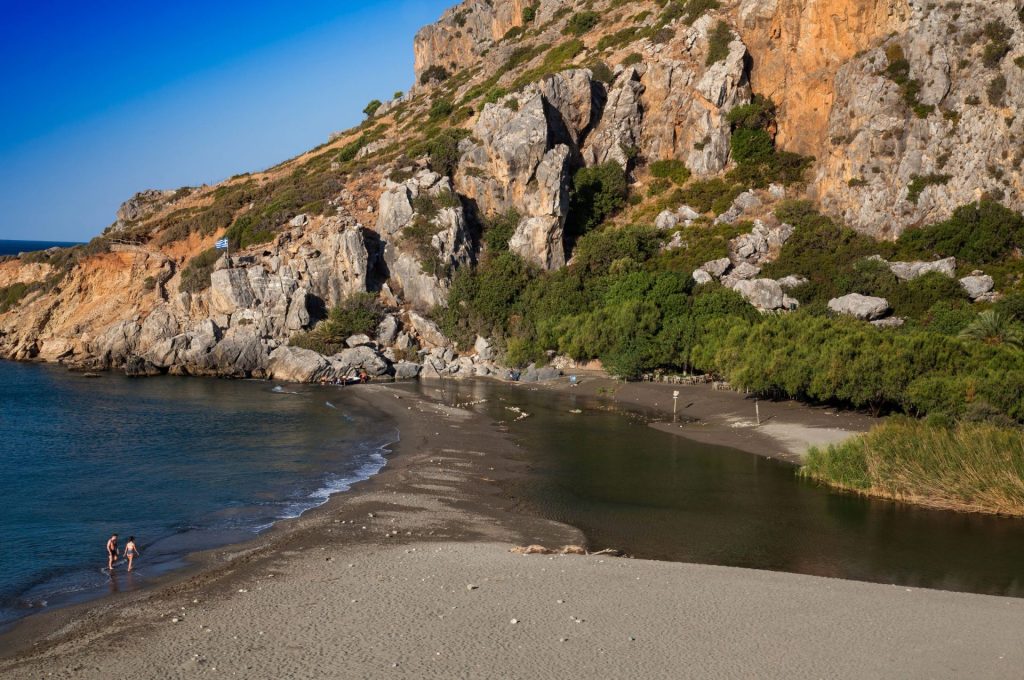
Preveli Beach Rethymno CV

Agios Pavlos beach: Where the sunsets dive before the sand dunes

On the southern coast of Rethymno, near the village of Akoumia, lies Agios Pavlos, a peaceful beach about 55 km from the city. Its western edge, known as the Sand Dunes (Ammolofoi), is a hidden treasure where golden dunes meet deep blue waters in a wild, untouched setting. The beach is quiet and expansive, with natural shade from sea caves and just a few umbrellas. It’s ideal for those seeking solitude, serenity, or a more laid-back, clothing-optional experience. As the day fades, the sun sets directly into the Libyan Sea, casting brilliant colors over the dunes and offering one of the most breathtaking sunsets in Crete.

Agios Pavlos beach Rethymno crete CV

Spilies Beach: Cliffs, Caves, and Hidden Beauty

Spilies Beach (also known as Kitrinosis or “Tou Maliou to Ryiaki”), is a quiet beach in a small pebbly cove, located just 15 km east of Rethymno, near Latzimas between Skaleta and Geropotamos. Despite its proximity to the national highway, it remains relatively undiscovered. Framed by towering cliffs, the beach gets its name from the striking sea caves carved into the rock, ( spilies lit. means caves in Greek) especially on the western side. These caves create a dramatic landscape and serve as a sanctuary for the endangered Mediterranean monk seal (Monachus monachus). The beach offers a few umbrellas and sun loungers, as well as a small canteen, yet still retains its unspoilt charm. The crystal-clear waters are inviting, but when the northern winds pick up, waves roll in, adding a splash of thrill for confident swimmers seeking a bit of adventure.

Agia Fotini Beach: A hidden gem on Crete’s untamed south coast

Located near the village of Kerames, around 49 km south of Rethymno, Agia Fotini, is a tranquil coastal hideaway nestled along the lesser-known Keramiani Gialia shoreline. This peaceful beach charms visitors with its blend of coarse sand and pebbles, as well as its striking rocky formations which carve out intimate swimming spots. The beach remains blissfully unorganized, with no sunbeds or umbrellas, offering an authentic back-to-nature experience. A rustic taverna, once a carob warehouse, now welcomes travelers with local flavours and unbeatable views. Adventurous souls can explore the rocky coast to the west to discover secluded coves such as Pyrgos Beach, an idyllic place to enjoy peaceful swims, sunbathe and take in the raw beauty of Crete in perfect solitude.

Agia Fotini Beach Rethymno CV

Hidden beaches of Crete: The stunning paximadia islets

ust off the southern coast of Crete, in the serene Bay of Messara, lie the twin uninhabited islets of Paximadia, two wild gems floating about 12 km south of Agia Galini. From a distance, they appear to be one landmass, but take a closer look and you will discover Megalo (Big) and Mikro (Small) Paximadi, which are separated by a narrow strip of water and are known as “The Little Elephant” by the locals due to their unusual shape.

These rocky islets boast surprisingly beautiful pebble beaches with incredibly clear, turquoise waters, perfect for swimming, snorkelling or simply lounging around in nature. Mikro Paximadi boasts several small coves, while Megalo Paximadi features impressive cliffs and secluded spots such as the vibrant Varkaki Cove and the striking Sakouleva Headland.

Daily boat trips from Agia Galini or Kokkinos Pyrgos will take you there, offering a chance to explore these remote shores and enjoy breathtaking views of the Libyan Sea. If you’re lucky, you might even spot dolphins along the way!

Paximadia Islands crete Libyan sea CV

Polyrizos Beach: A serene coastal retreat

Polyrizos Beach is located about 47 km southwest of Rethymno, near the village of Rodakino. This idyllic spot is surrounded by lush olive groves that extend all the way to the shoreline.

The beach is embraced by a large hill called Kastelos to the west, while its eastern side reveals peaceful coves, rocky outcrops and shady tamarisk trees. With its soft sand and calm, shallow waters, Polyrizos is the perfect destination for families and those seeking a peaceful haven. Visitors can enjoy a handful of tavernas creating a relaxed atmosphere. For added tranquillity, explore the eastern coves or take a short drive west to the nearby Peristeres Beach. 

Top Crete beaches Heraklion Region

Komos Beach: Crete’s stunning nudist paradise

Spanning 2 kilometres of pristine golden sand and framed by natural dunes and tamarisk-covered cliffs, Komos Beach is a true coastal gem. This spacious beach offers a peaceful atmosphere, crystal-clear waters and vibrant marine life, making it perfect for snorkellers eager to explore the underwater world.

The sandy shore gradually transitions to a rocky seabed towards the northern end, adding variety to your seaside experience. Admired not only for its beauty, Komos is also renowned as Crete’s top naturist destination. The official nudist area begins just north of the nearby archaeological ruins and extends for over half a kilometer, providing ample space and shaded areas under the trees.

Please note that Komos Beach is a protected habitat for the endangered loggerhead sea turtles, and the conservation group Archelon carries out regular monitoring. It is vital to respect the turtle nests and avoid interfering with the hatchlings as they make their way to the sea; this is crucial for their survival. Night visits are strongly discouraged in order to protect these remarkable creatures.

Agiofarango beach & gorge: Crete’s sacred coastal escape

Situated roughly 80 km south of Heraklion, Agiofarago Beach lies at the point where the breathtaking Agiofarago Gorge opens to the sea. You can reach it either by taking a 20–30 minute scenic walk through the gorge, or by boat from nearby harbours such as Matala, Agia Galini or Kaloi Limenes. Along the way, you will come across historic hermit caves, the charming Chapel of Saint Anthony and the Goumenospilios Cave.

The beach has fine pebbles and calm, clear waters which are perfect for swimming. Those seeking a bit more adventure can hike eastward to the secluded sea lake of Vourvoulitis. Just offshore, the tiny islet of Papadoplaka is renowned for its sea salt harvesting. Agiofarago Gorge, once home to around 300 hermits who lived in solitude, is one of Crete’s most remarkable and accessible gorges and the island’s first ascetic retreat.

Where the mountains meet the sea: Discover Lentas beach in Crete

Nestled beneath the imposing Asterousia Mountains, approximately 74 kilometres south of Heraklion, Lentas is a picturesque coastal village where time appears to stand still. The village’s beach runs along the waterfront and is dotted with umbrellas, sunbeds and relaxed tavernas serving delicious local dishes just steps from the sea. Sheltered between the natural capes of Psamidomouri to the east and the lion-shaped Kefala to the west, Lentas Beach is renowned for its tranquil, clear waters and serene atmosphere.

This laid-back rhythm continues beyond the village, where you will find quiet coves such as the nearby Dyskos Beach, which is a favourite among naturists. From ancient legends surrounding the landscape to friendly ducks wandering the shore, Lentas is a true hidden gem and an ideal escape for those seeking simplicity, sunshine and an authentic experience of southern Crete.

Aspes Beach: A wild beauty of Crete’s southern coast

Hidden within one of the most remote corners of the eastern Asterousia Mountains, Aspes Beach is a breathtaking sight that feels worlds away from the crowds. Around 58 km southeast of Heraklion and just a short boat ride from the small port of Tris Ekklisies, this secluded gem is accessible only by sea, preserving its untouched charm. What sets Aspes apart is its stunning landscape: steep cliffs rise vertically from the water, carved by time into massive caves that seem almost sculpted by hand. The Aspes beach features rare coarse black sand, more commonly found near Ierapetra, contrasting beautifully with the crystal-clear, turquoise waters.

Top Crete beaches Eastern Crete and Lasithi

Vai Beach & Palm Forest: Nature’s oasis in Eastern Crete

Nestled on the remote eastern edge of Crete, Vai is a unique destination where a golden beach meets Europe’s largest natural palm grove. With around 5,000 rare Cretan palm trees spread across 250 acres of lush greenery, Vai has a vibe that’s more tropical escape than typical Mediterranean. Just 24 km from Sitia, this protected oasis is home to soft sand, turquoise waters and amenities such as sun loungers, water sports and a snack bar. The area is also an important rest stop for migratory birds, offering visitors a rare opportunity to witness their spring or autumn flights. With the historic Toplou Monastery just nearby, it’s a full sensory escape into nature, beauty, and tranquility.

Vai Beach crete CV

Discover Xerokampos Beach: Crete’s untouched coastal escape

Xerokampos is a secluded corner of south-east Crete, located approximately 103 km from Agios Nikolaos and 47 km from Sitia. The coastline stretches for around six kilometres and features a diverse mix of sandy and pebbly beaches, hidden coves and spectacular cliffs, all with crystal-clear waters and natural clay deposits.

At the heart of the area is Trachila, a hilly cape rising 54 metres above sea level and pointing southeast towards the three deserted Kavalois islets (Anavatis, Kavalos and Kefali), which naturally divide the coast into two stunning sections.

Xerokampos offers a rare blend of untouched nature, tranquillity and raw beauty, perfect for travellers looking to escape the crowds and immerse themselves in authentic Cretan coastal charm.

Xerokampos beach crete CV

Discover the serene beauty of Zakros Beach

Located 107 km east of Agios Nikolaos, the serene fishing village of Kato Zakros sits at the entrance to the historic Gorge of the Dead. Surrounded by ancient olive groves and close to the renowned Minoan palace, Zakros Beach is formed of three small coves, separated by rocky cliffs. The main cove boasts a pebbly shoreline, calm, crystal-clear waters, and natural shade provided by tamarisk trees, ideal for escaping the crowds, even during the peak season. The southern cove boasts a river mouth, creating calm waters in summer, while the northern coves provide peaceful, secluded areas that are ideal for fishing and unwinding. Accessible by car from Sitia after a one-hour drive through some of eastern Crete’s most picturesque landscapes and traditional villages, Zakros Beach invites visitors to experience an authentic, lesser-known side of the island.

Zakros beach crete CV

Almyros Beach: Crystal waters, rich wildlife, and water sports

Located just 2.5 km south of Agios Nikolaos, Almyros Beach is the city’s favourite coastal getaway. Where the Almyros River meets the sea, a unique wetland ecosystem has been created, teeming with abundant brackish waters. This protected natural area, which is rich in Mediterranean vegetation and reeds, adds to the beach’s distinctive charm.

With its sandy shore and beach bars, not to mention a variety of water sports, Almyros is ideal for both relaxation and adventure. The shallow, cool waters owe their freshness to the river and nearby underwater springs. Almyros Beach is easily accessible, located just below the main road, and invites travelers to enjoy its blend of natural beauty and lively seaside activities.

Almyros beach crete CV

Contact us and let the True Cretan experts craft your unforgettable beach itinerary today!

Beach Safety & Etiquette in Crete


Water & Wind Safety
Beaches on Crete’s north coast often face strong winds and rough waves, so it’s a good idea to check local conditions before swimming. The south coast usually has calmer waters, but watch out for sudden sandstorms that can sometimes roll in.
Facilities
Most popular beaches provide sunbeds and umbrellas for rent, along with restrooms and lifeguards during the busy summer months. It’s always good to arrive early in the morning during peak season to secure your spot.
Stay Safe and Sun-Protected
For secluded, unorganized beaches, it’s essential to bring plenty of sunscreen, a hat, ample water, and an umbrella to stay hydrated and protected from the strong sun, plus, try to avoid the midday heat for a safer, more comfortable experience.
What to Wear
Light, breathable clothing, a hat, and sunglasses are essentials to protect yourself from the Mediterranean sun. Many beaches have rocky areas and sea urchins, so wearing water shoes or sandals is highly recommended to protect your feet and enjoy your swim safely.
Naturism Etiquette
Some beaches in Crete are known for being naturist-friendly, but always practice discretion and respect the locals. Follow unofficial rules, keep a low profile, and be considerate of other visitors’ comfort.
© True Cretan 2025 | Greek Ministry of Tourism | Travel & Tour Operator License: 1039E70000463601, a sister Company to Kids L G, LLC (Kids Love Greece)