
Nikos Kazantzakis Museum in Myrtia
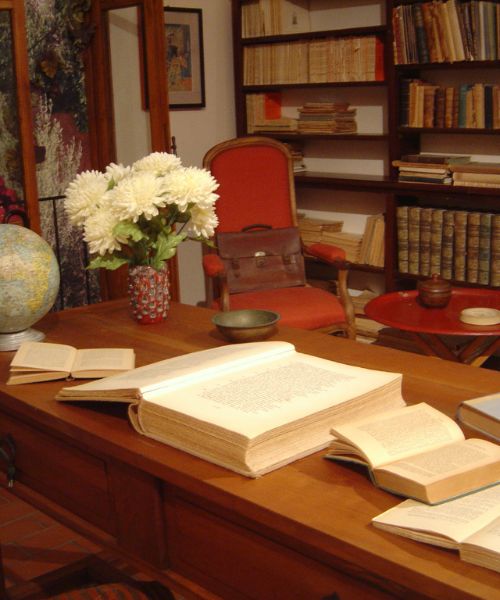
Located in his home village, this museum is dedicated to his life, work, and philosophy. It features manuscripts, personal effects, photographs, and exhibits related to his literary and philosophical pursuits. The museum is housed in the building where his father, Kapetan Michalis, once lived, and offers an immersive experience into Kazantzakis’s personal and creative world. Visitors can explore multimedia presentations, rare first editions, and detailed accounts of his travels, which deeply influenced his writing. The museum also hosts cultural events, lectures, and temporary exhibitions, giving guests a richer understanding of how Kazantzakis’s ideas shaped modern Greek literature and continue to inspire readers around the world. Nikos Kazantzakis: A Guide to the Man Who Embodied the Cretan Soul
Explore the life and work of Nikos Kazantzakis, the renowned author of Zorba the Greek.
The books of Nikos Kazantzakis are as raw, passionate, and rebellious as Crete itself. His literature embodies the same fierce love of life, defiance against authority, and existential questioning that define the Cretan spirit; strong, uncompromising, and yet profoundly human, refusing to bow to any convention or oppression.
The narrow streets of Heraklion, where Nikos Kazantzakis was born in the late 19th century, were alive with the scents of the sea, olive groves, and fresh-baked bread coming through open windows. Crete was not just the backdrop but a living force in his life. His childhood home was filled with the warm light of the Cretan sun, the elders narrating stories of rebellion, women always busy with the daily chores, and the distant echoes of church bells.
Each corner held evidence of daily life—a woven basket full of figs, well-worn sandals near the door, and family portraits faded from decades of sun. Meanwhile, the clash of clanking swords and the pounding of hooves were never far off, constant reminders of the Ottoman rule that shaped Kazantzakis’s youth. All these smells, sounds, and sights of the city filled the young boy with a fierce love for Crete.
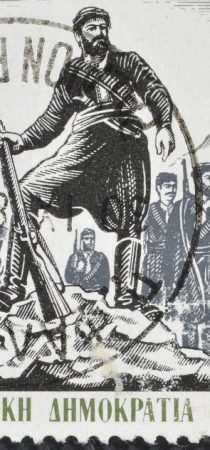
When Kazantzakis was just six years old, the 1889 rebellion forced the family to flee their home in Heraklion and live as refugees in Piraeus for six months. His family had faced danger when young Nikos was barricaded inside their home, and his father stood armed, determined to protect his family at any cost. The experience marked Kazantzakis as he was exposed for the first time to struggle and survival, themes that later dominated his literature. His early education was equally influential to his work.
Early Life & Cretan Influences
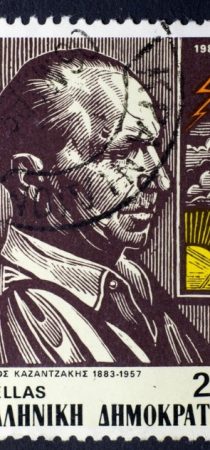
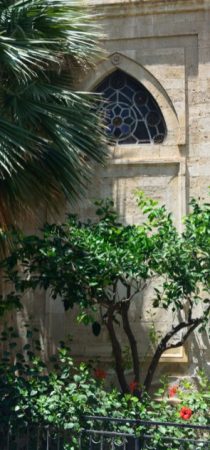
Nikos Kazantzakis was born in Kandiye (modern-day Heraklion) on February 18, 1883, a time marked by social instability, insecurity, and the struggle to survive. His upbringing in this stormy environment, along with his deep roots in the Cretan village of Myrtia, where he spent most of his childhood, greatly influenced his worldview and later work.
Crete’s status under Ottoman control meant that Kazantzakis grew up in an environment of conflict and violence. The themes of freedom, death, and struggle he witnessed in these early years became central to his literature. Moreover, he absorbed the local dialect and traditions of Crete from an early age, particularly from the family’s village life in Myrtia. This distinctive voice, which resonated with the spirit and struggles of the Cretan people, helped Kazantzakis vividly portray the local culture and characters in his works.
The driving force has always been his deep love for Crete. His books describe an island under siege, life in Cretan villages, and his early memories of war, resistance, and refuge. In his pages, he immortalized the Cretan landscapes, people, and customs while addressing universal questions about human dignity, spiritual search, and the eternal struggle between freedom and acceptance.
The island shaped him, yet at the same time, he became an inseparable part of Crete and ultimately, one of Greece’s most enduring and beloved writers.
A Seeker of Freedom: The Philosophical Journey
Kazantzakis’s intellectual and spiritual journey was deeply influenced by his love for philosophers such as Friedrich Nietzsche and Henri Bergson. In essence, his lifelong quest for spiritual freedom was a philosophical rebellion against convention and tradition. Nietzsche’s affirmation of life and his concept of the “overman” (Übermensch) inspired Kazantzakis to embrace a philosophy centered on heroic struggle and the rejection of fixed moral codes imposed by religion or society. Nietzsche’s notion of the “death of God” and the subsequent human responsibility to create one’s own values resonated with Kazantzakis’s desire for spiritual autonomy and freedom from dogma.
Henri Bergson was Kazantzakis’s teacher in Paris. Bergson’s concept of “élan vital,” or vital creative force, emphasizing intuition over reason and highlighting the dynamic process of evolution in life, fueled Kazantzakis’ intellect, who viewed humans as parts of an eternal struggle towards self-realization and spiritual clarity. Ultimately, Bergson’s optimism, his fluidity and creativity, somehow balanced Nietzsche’s stark ideology. The result was Kazantzakis’s unique style of philosophical rebellion and hope.
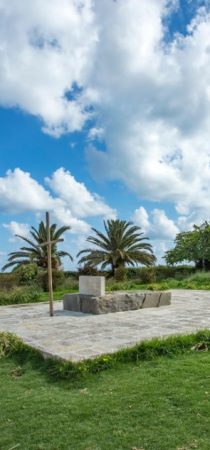
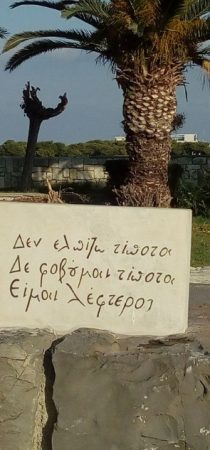
Kazantzakis’s lifelong spiritual rebellion was against fixed doctrines, social conventions, and restrictive beliefs that limited human potential and freedom. His writing is underlined with the tension between opposing forces—faith and doubt, life and death, freedom and fate—which he sought to reconcile through a personal philosophy grounded in struggle, creation, and heroic effort toward freedom. This philosophical underpinning is powerfully captured in his famous epitaph: “I hope for nothing. I fear nothing. I am free.” Thousands of people visit his tomb to this day, located at the highest point of the Walls of Heraklion, at the Martinengo bastion, offering a panoramic view of the city.
A Shared Spirit of Defiance
His Legacy: Zorba the Greek and Beyond
The most famous work of Kazantzakis is his widely recognized and translated Zorba the Greek. Its hero is the primitive, passionate Alexi Zorba, a larger-than-life man who thrives in every aspect of life—work, love, dance, music, and risk. Zorba believes that life’s meaning lies in direct experience. In Kazantzakis’ words, This is true happiness: to have no ambition and to work like a horse as if you had every ambition. To live far from men, not to need them and yet to love them. To have the stars above, the land to your left and the sea to your right, and to realize, of a sudden, that in your heart, life has accomplished its final miracle: it has become a fairy tale.
His exact opposite is the book narrator, who is intellectual, reserved, and cautious. Through this contrast, Kazantzakis explores the struggle between two major approaches to life: intellectual distance and physical presence.
Alexi Zorba fully throws himself into whatever life brings. He womanizes, dances, gets his hands dirty alongside the workers, and fearlessly risks his life. Even in the face of tragedy, his spirit remains unbroken. Zorba personifies the basic human instincts and a profound thirst for life. Through his hero, Kazantzakis invites readers to reconsider their relationship with existence and mortality, and to live life fully.
Beyond Zorba the Greek, Kazantzakis explored similar philosophical and existential themes in other works, including Captain Michalis (also known as Freedom or Death), The Last Temptation of Christ, and The Odyssey: A Modern Sequel.
The latter is a monumental epic poem that continues the story of Homer’s Odyssey. For Kazantzakis, Odysseus is a complicated man who struggles with the meaning of life and his spiritual identity. He takes part in political and labor revolutions, symbolizing the struggle against oppression and injustice. His companions are all symbols of human values, such as Kapetán Énas (a Greek “Captain One”), who personifies individualism.
Ultimately, he goes against gods and ideals in a heroic, spiritual fight for independence. The book echoes Nietzschean themes of courageous struggle and Walt Whitman’s celebration of life. Kazantzakis’s ultimate goal is to promote the importance of spiritual freedom over dogmatic certainty.
Key Places to Experience Kazantzakis’s Crete
Kazantzakis’ Grave in Heraklion
The final resting place of Kazantzakis is atop the Martinengo Bastion on the Walls of Heraklion, offering panoramic views of the city. His grave is marked with his famous phrase: “I hope for nothing. I fear nothing. I am free,” symbolizing his philosophical outlook and unyielding spirit. Historical Museum of Crete in Heraklion
Kazantzakis’s personal belongings and archives have been donated to this museum, making it a significant site for understanding his historical and cultural context. The museum highlights Crete’s rich history and Kazantzakis’s place within it. Final Thoughts
The life and work of Nikos Kazantzakis embody the very soul of Crete, shaped by centuries of struggle and fights. Having experienced occupation and oppression from a young age, he always stressed the importance of freedom, either personally or for one’s homeland. He drew inspiration from the beauty of the Cretan landscape, traditional villages like his beloved Myrtia, and the courageous souls of the Cretan people. His two main themes always remained the rebellion against any forced rule and the deep, unconstrained love for life.
Experiencing Kazantzakis’s Crete is to walk through the landscapes and sites that inspired his work—from the village of Myrtia to the Martinengo Bastion where he is buried, overlooking the modern city of Heraklion. In True Cretan, we can lead the way and help you explore these sites firsthand. We will walk in the footsteps of Kazantzakis, led by a passionate local expert. Join us in a pilgrimage to the literature, history, and wild beauty of Crete, the island that shaped one of Greece’s greatest literary minds.