Exploring the Mysteries of the Minoans

The Minoan civilization shaped ancient Crete. Discover the origins, achievements, and mysteries of Europe’s earliest advanced society.

Written by Maria Chaloglou on November 21, 2025

The Minoan civilization flourished on Crete from around 2700 BCE to 1450 BCE. Named after the mythical King Minos, the Minoans are often regarded as Europe’s first advanced civilization

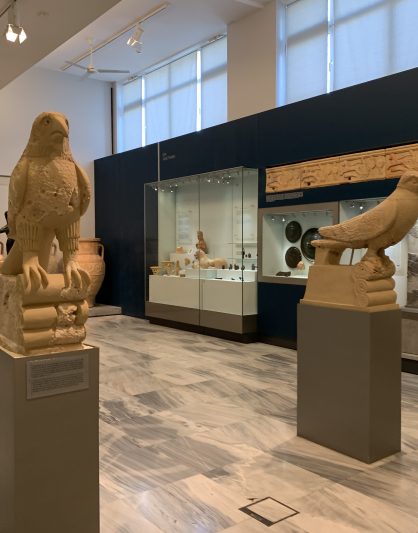
Their monumental architecture, vibrant frescoes, and refined craftsmanship reveal a society of remarkable ingenuity and artistic sensitivity. Even today, the remains of their world continue to fascinate archaeologists, historians, and travellers, offering glimpses into a civilisation that still holds many unanswered questions.

Read on to explore the wonders, mysteries, and lasting legacy of the Minoans.

Origins and Historical Periods

Crete’s first settlers trace back to the Neolithic times, around 6500 BCE. These early inhabitants laid the foundation for a society characterized by complex social hierarchies, advanced urban planning, and extensive trade networks across the Mediterranean.

The Minoan Civilization can be divided into three periods:

Early Minoan Period (c. 3000–2100 BCE)
This formative phase saw the establishment of agricultural communities and early settlements across the island. Advances in pottery, metallurgy, and craftsmanship reflect a society already moving toward complexity and organisation.
Middle Minoan Period (c. 2100–1600 BCE)
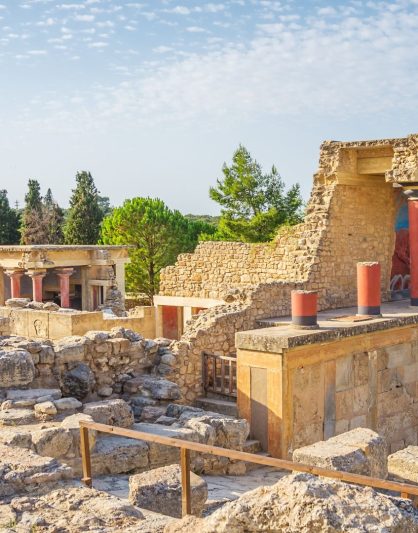
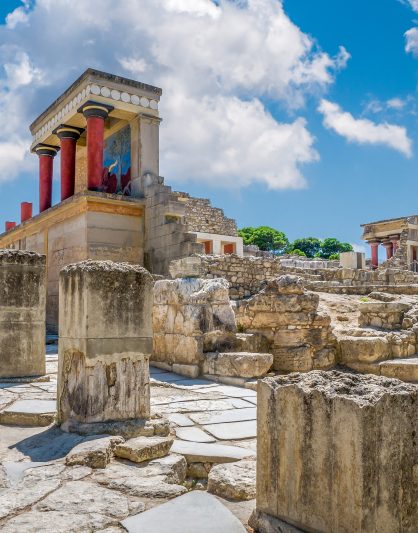
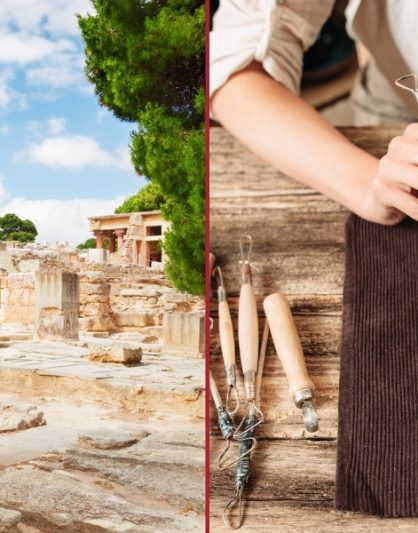
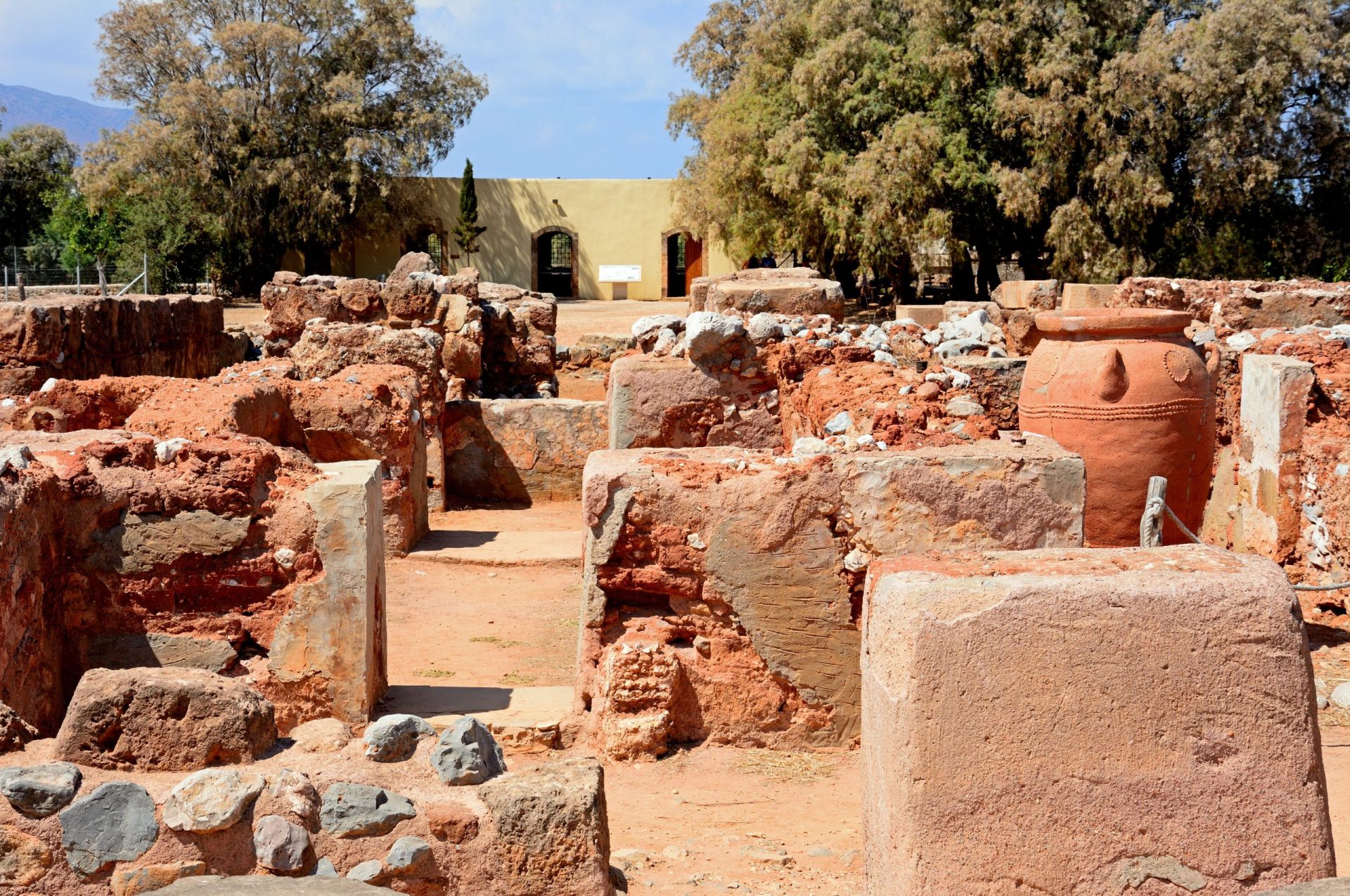
This period marks the rise of the great palatial centres, including Knossos, Phaistos, and Malia. These complexes functioned as political, economic, and religious hubs. Artistic expression flourished, producing exquisite pottery, figurines, seals, and frescoes. The famous Kamares Ware, with its delicate, eggshell-thin walls, is a hallmark of this era.
Late Minoan Period (c. 1600–1100 BCE)
The peak of Minoan civilization, reaching its height around 1600 BCE. Marine Style pottery, richly decorated with sea creatures, reflects the Minoans’ deep connection to the sea. By the mid-15th century BCE, signs of decline appeared, followed by the gradual takeover of Crete by the Mycenaeans from mainland Greece.

Palaces, Kings, and Teacups

Minoan society was complex, structured, and deeply symbolic. Religious practices centred on peak sanctuaries and sacred caves, with powerful motifs such as snakes and bulls playing a central role. The bull, in particular, appears to have been a dominant symbol at Knossos.

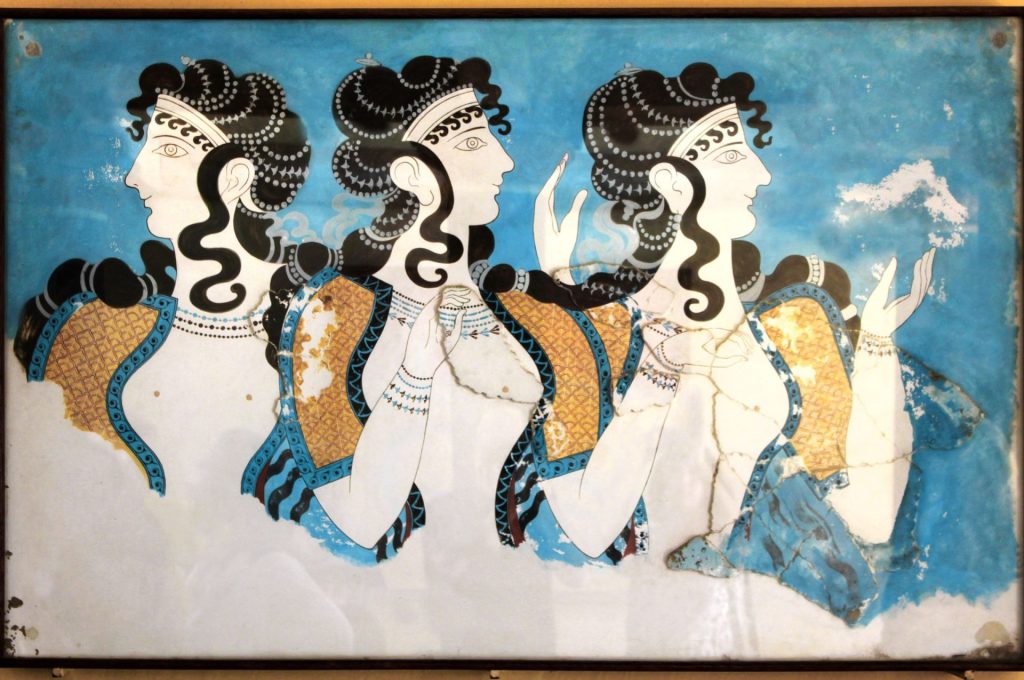
Minoan art is vivid and dynamic. Frescoes depict scenes of nature, rituals, and athletic feats such as bull-leaping, images that convey movement, colour, and energy. Minoan craftsmen were highly skilled and often worked beyond Crete, spreading their influence throughout the Aegean.

Trade and Economy

The Minoan economy was based primarily on agriculture. Olives, wine, figs, wool, and grains formed the backbone of production. Through extensive maritime trade networks, the Minoans exported agricultural goods and fine pottery while importing metals and luxury materials such as ivory and gold.

Trade routes also facilitated cultural exchange, strengthening ties with neighbouring civilisations and reinforcing Crete’s role as a key Mediterranean hub.The Minoans_ Malia _CV
Writing and Language

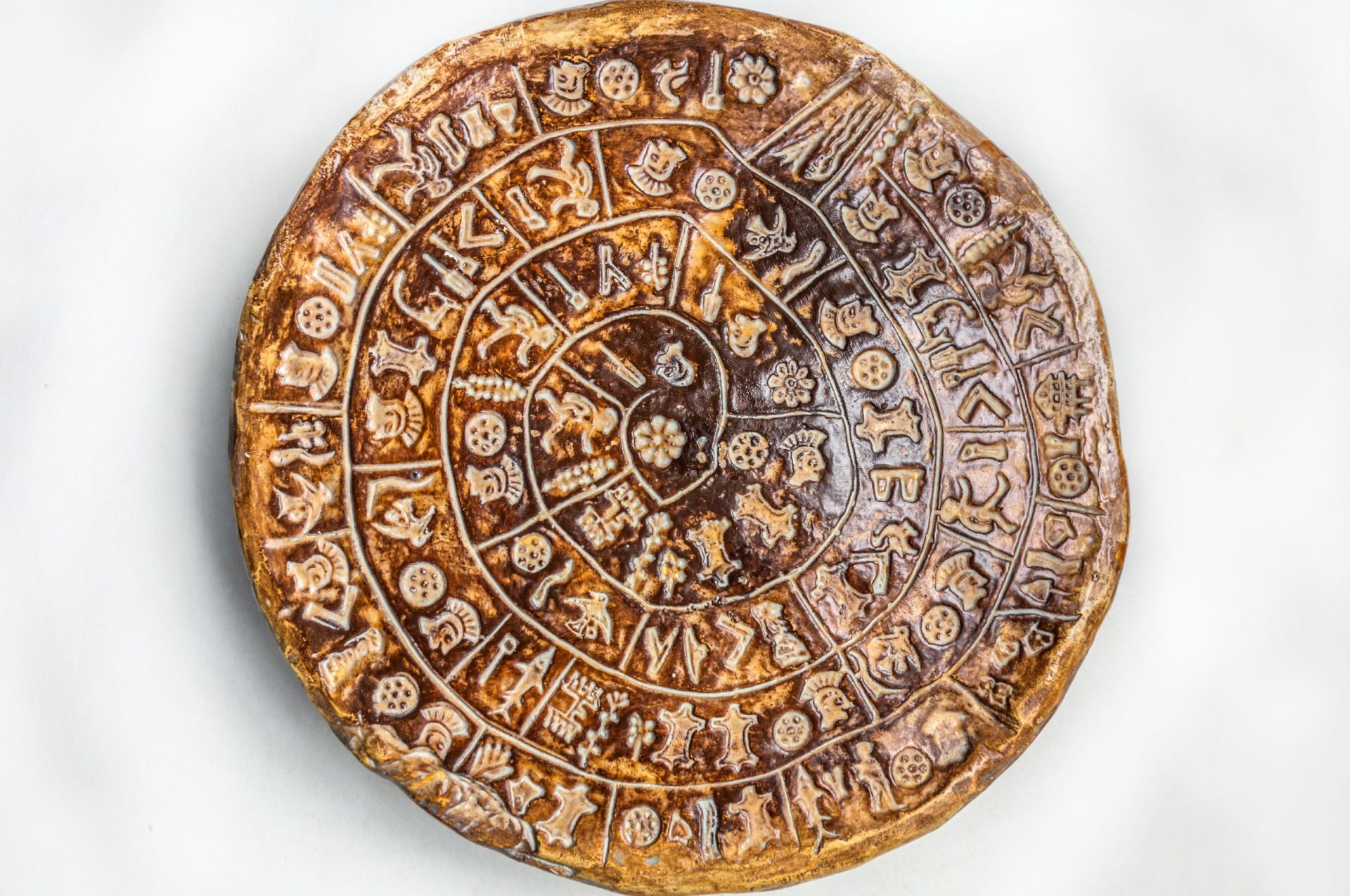
The Minoans developed two writing systems that remain undeciphered: Cretan Hieroglyphs and Linear A. Following the decline of Minoan civilisation, the Mycenaeans introduced Linear B, which was deciphered in 1952 by the British architect Michael Ventris.

Linear B tablets, preserved mainly on clay, record administrative details such as inventories and trade transactions. As the Minoans left no deciphered written records of their own, they are considered a prehistoric civilisation, adding to the mystery surrounding their society.

The Minoans_ Phaistos Disc_CV

Ultimate Decline

The Minoan civilization came to a sudden decline around 1450 BCE. The causes remain debated, with major theories including the catastrophic eruption of the Santorini volcano and external invasions, particularly from the Mycenaeans. 

Archaeological evidence points to widespread destruction of palaces, after which the Mycenaeans appear to have taken control of Crete, marking the end of the Minoan era.

Later Myths Connected to the Minoan Civilization

The Minoans are deeply intertwined with Greek mythology. The legend of the Minotaur and the Labyrinth reflects the symbolic importance of the bull and the complex layout of Knossos. According to myth, Theseus defeated the Minotaur with the help of Ariadne and escaped using her thread, a story that endures as a metaphor for overcoming danger and complexity.

The myth of Daedalus and Icarus also originates from Crete. Imprisoned by Minos, Daedalus crafted wings of wax to escape with his son. Icarus flew too close to the sun, fell into the sea, and gave his name to the Icarian Sea.

Another foundational myth is that of Europa and Zeus. Disguised as a bull, Zeus carried Europa to Crete, where she became the mother of Minos. According to legend, the lands they crossed were later named Europe in her honour.

The Legacy

The Minoans_Minoan ladies fresco_CV

Minoan culture is inseparable from modern Crete. Across the island, references to Minos, Knossos, and Minoan symbols appear everywhere, from museums and archaeological sites to everyday objects, shops, and local products.

It is not uncommon for farmers or builders to uncover fragments of Minoan pottery while working the land, a testament to how deeply this civilisation is embedded in the Cretan landscape. Locals take pride in this heritage and are often eager to guide visitors toward nearby archaeological sites or museums.

Tip: If you plan to visit any Minoan sites, be sure to pre-purchase your entrance tickets well in advance as they shell-out quickly.

Contact us and Book a Personalized Minoan Experience

Latest

From our blog

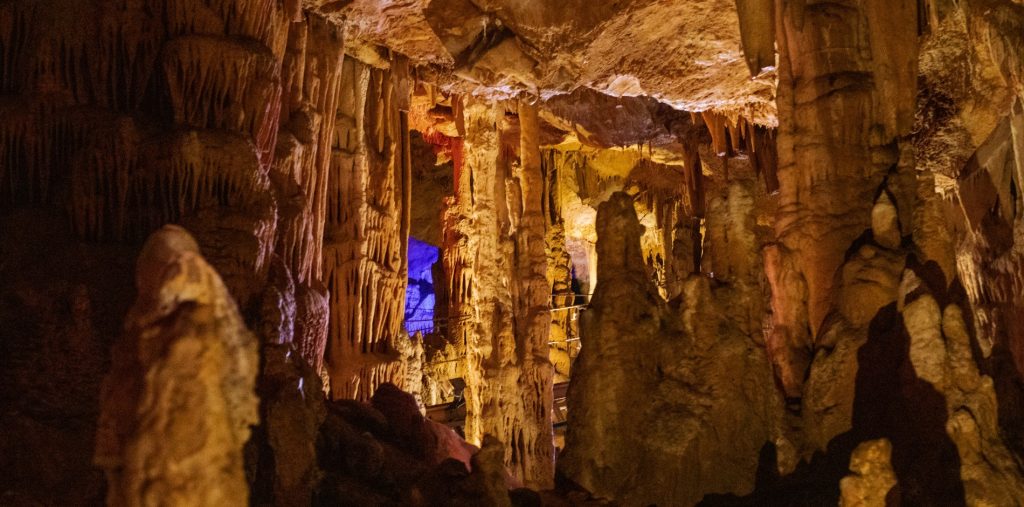
multicolored abstract stalagmites sfendoni cave - CV Featured
Sfendoni Cave in Zoniana, Crete

Discover Paleochora, Crete\'s laid-back south coast gem. Explore stunning beaches, authentic tavernas, hiking trails, and local Cretan culture.

Continue reading

© True Cretan 2025 | Greek Ministry of Tourism | Travel & Tour Operator License: 1039E70000463601